The Spread of Christianity
As the Church spread, she took on the languages and minds of many peoples. Four great cities — Jerusalem, Antioch, Alexandria, and Constantinople — shaped the faith we hold today.
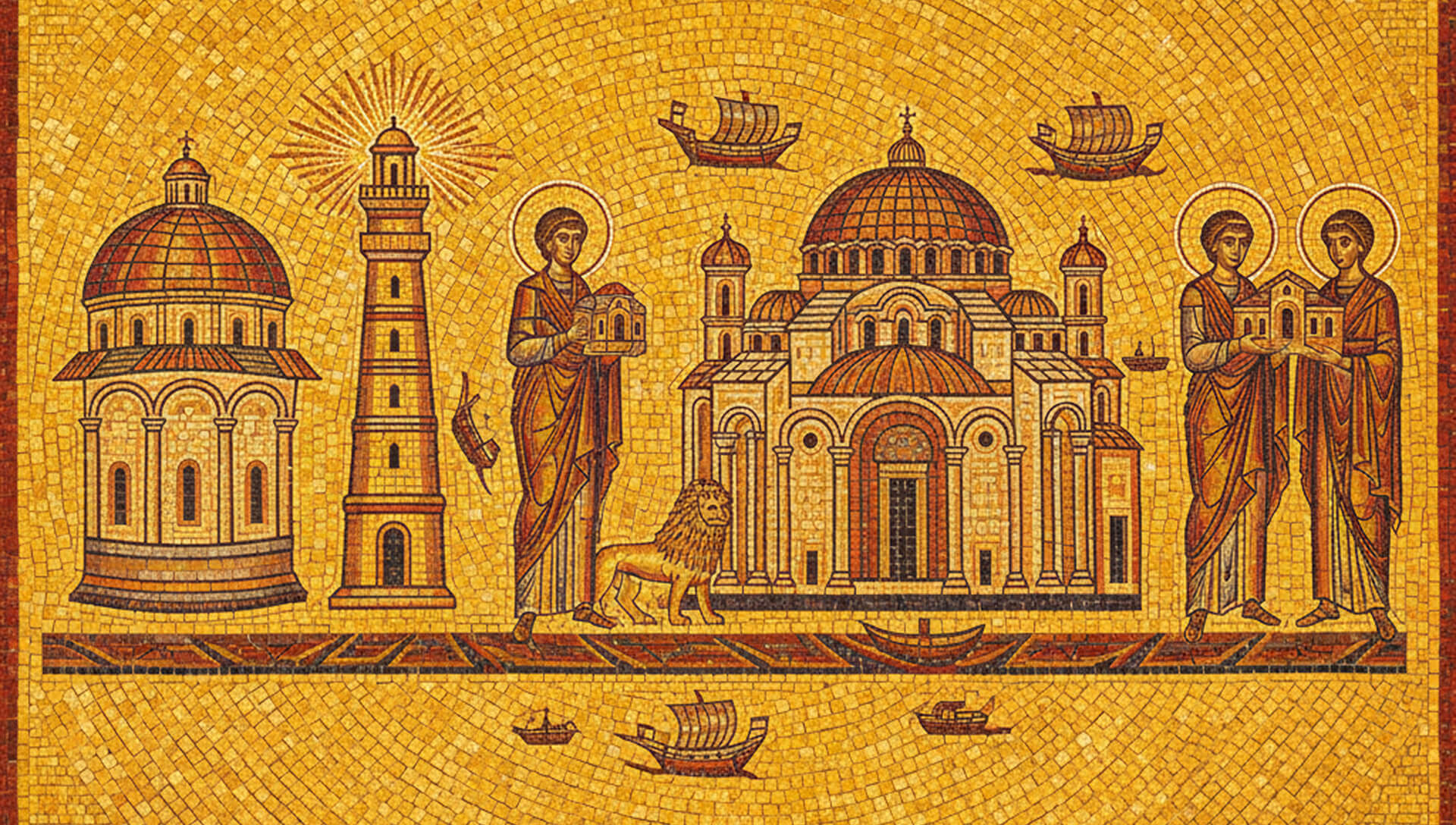
As the Church spread, she welcomed and adapted to the many cultures she met, while holding fast to everything that agreed with the Gospel. She took on the peoples’ languages and their ways of thinking, as I described when tracing her earliest journeys in The Eastern Churches: A Historical Overview. Out of that missionary spirit, four great cities rose as the anchors of early Christianity.
Four Cities, One Faith
Jerusalem, Antioch, Alexandria, and Constantinople each became a center of the young Church. Jerusalem is the mother of all churches, the place where the Church was founded. Antioch was established by St. Peter, with frequent visits from St. Paul. Alexandria in Egypt honors St. Mark as its founder, and Constantinople — first known as Byzantium — became the new capital of the Roman Empire under the Emperor Constantine.
These patriarchal cities guided the regions around them, shaping the appointment of bishops and the growth of theology and worship. Together they labored to formulate Christian doctrine through the Ecumenical Councils, which defined the belief of the whole Church — among them the great Nicene Creed. (I write about the Creed and the councils that gave it to us in The Most Holy Trinity.) Sadly, differences of culture and language among these cities eventually led to division, often more than any real disagreement in doctrine.
Jerusalem
Jerusalem is the mother of all churches, for it is where our Lord died and rose again. Many of our earliest feasts were born there, celebrating the events of Christ’s life in the very places they happened — Lazarus Saturday, Palm Sunday, the Crucifixion, and the glorious Resurrection. After the martyrdom of St. Stephen, Jewish Christians fled north to Antioch. St. James the Apostle was the first bishop of Jerusalem, though the city never grew into a great power within the Church. Today Jerusalem is home to many Eastern and Western communities alike — Latin Catholic, Lutheran, and Anglican among them.
Antioch
The Church of Antioch was deeply Semitic and kept more Jewish customs than any other, with the largest rabbinic school outside of Palestine. Once a vibrant heart of Christianity, the city is now largely Muslim. The faith arrived from Jerusalem and was welcomed first by local Jews and then by Gentiles. It was here that the question arose whether Gentile converts must be circumcised and keep the dietary laws — and here that the Church learned one need not become a Jew to be a Christian. It was in Antioch, too, that the words Christian and Catholic were first used.
By the third century the Christian school of Antioch had surpassed the older Jewish institutions and rivaled the school of Alexandria. Antiochian missionaries left their mark across the East, reaching even as far as China. Yet the city suffered greatly — theological schisms, and invasions by Persians and later by Muslim Arabs. Nine distinct churches trace their roots to Antioch, among them the Chaldean Catholic Church and the Syriac Orthodox Church. (I sort out that family of churches in Understanding the Eastern Churches.)
Alexandria
Alexandria’s story is more straightforward. St. Mark brought the faith to Egypt, and it proved rich soil. Even after twelve centuries of Muslim rule, Christianity endures there still. Monasticism itself began in Egypt, as men and women went out into the desert to pray and to draw near to the Lord. The Church of Egypt took an active part in the early councils, with figures such as St. Athanasius and St. Cyril rising as her great spokesmen.
Alexandria’s disagreement with the Council of Chalcedon in 451 marked a lasting division from the Churches of Constantinople and Rome. From Alexandria the ancient apostolic faith spread early to Ethiopia, which embraced Christianity in its own way, with dance and distinctly African imagery in its sacred art.
Constantinople
Constantinople rose to prominence when the Emperor Constantine made it the new capital of the Roman Empire in the fourth century, and it became the heart of the Byzantine Empire. That empire held great power until the city fell to the Muslim Turks in 1453. As it grew, so did the Byzantine Church, which shaped its liturgy from St. John Chrysostom and took on the beauty of the imperial court.
When most people today think of the Eastern Churches, it is the Byzantine Churches — Greek and Russian Orthodox — that come to mind. Byzantine Christians are the largest group of Eastern Christians, found throughout the Holy Land, Greece, Russia, and Eastern Europe, and beyond. Many Byzantine Catholic Churches, such as the Ukrainian and the Ruthenian, are present the world over.
Dear friends, when we see how the one faith took root in so many soils, we should marvel rather than be confused. The same Gospel that was preached in Jerusalem was sung in Greek, prayed in Syriac, and painted in Ethiopian gold. Give thanks for so rich an inheritance, and let it widen your heart toward every brother and sister who calls on the same Lord.

Chorbishop Don Sawyer — known warmly as Abouna Don — has spent a lifetime teaching the faith. His gift is making the rich tradition of the Church feel like a conversation across the kitchen table.